
13/02/2026
Why Indoor Air Quality (IAQ) Matters in Homes
At Fractal Designs, we believe future-ready homes go beyond aesthetics; they are designed to support health, comfort, and long-term performance. As today’s homes become more energy efficient and tightly built, indoor air quality plays an increasingly important role in how a space feels and functions. Thoughtful design, smart ventilation strategies, and a well-planned building envelope all work together to create environments that are healthier, more resilient, and built for the way we live now and into the future.
Why Indoor Air Quality (IAQ) Matters in Homes
Indoor air quality (IAQ) plays a major role in our health, comfort, and overall well-being. We spend most of our time indoors, and in today’s more airtight, energy-efficient homes, the quality of the air inside is directly shaped by how the house is designed, sealed, and ventilated.
What’s in the Air Inside Your Home?
Indoor air can contain a wide range of pollutants, including:
- Elevated CO₂ levels, which can affect focus and energy
- Volatile Organic Compounds (VOCs) from paints, finishes, furniture, and cleaning products
- Formaldehyde, commonly found in composite wood products
- Excess moisture and mold spores, often tied to poor ventilation or uncontrolled air leakage
Because modern homes are built tighter for energy efficiency, these contaminants can build up quickly if air movement isn’t intentional and well controlled.
Outdoor Air (and Pollutants) Still Find Their Way In
Outdoor air has a significant impact on indoor air quality. Pollen, vehicle exhaust, smoke, and fine particulates can enter a home through cracks, gaps, and unsealed penetrations in the building enclosure. This uncontrolled air leakage doesn’t just waste energy; it brings in pollutants without filtration or moderation.
This is why air sealing is just as important as ventilation. A properly sealed home allows fresh air to enter where and how we want it to, rather than leaking in randomly through walls, attics, or basements.
The Four Principles of Good IAQ Design
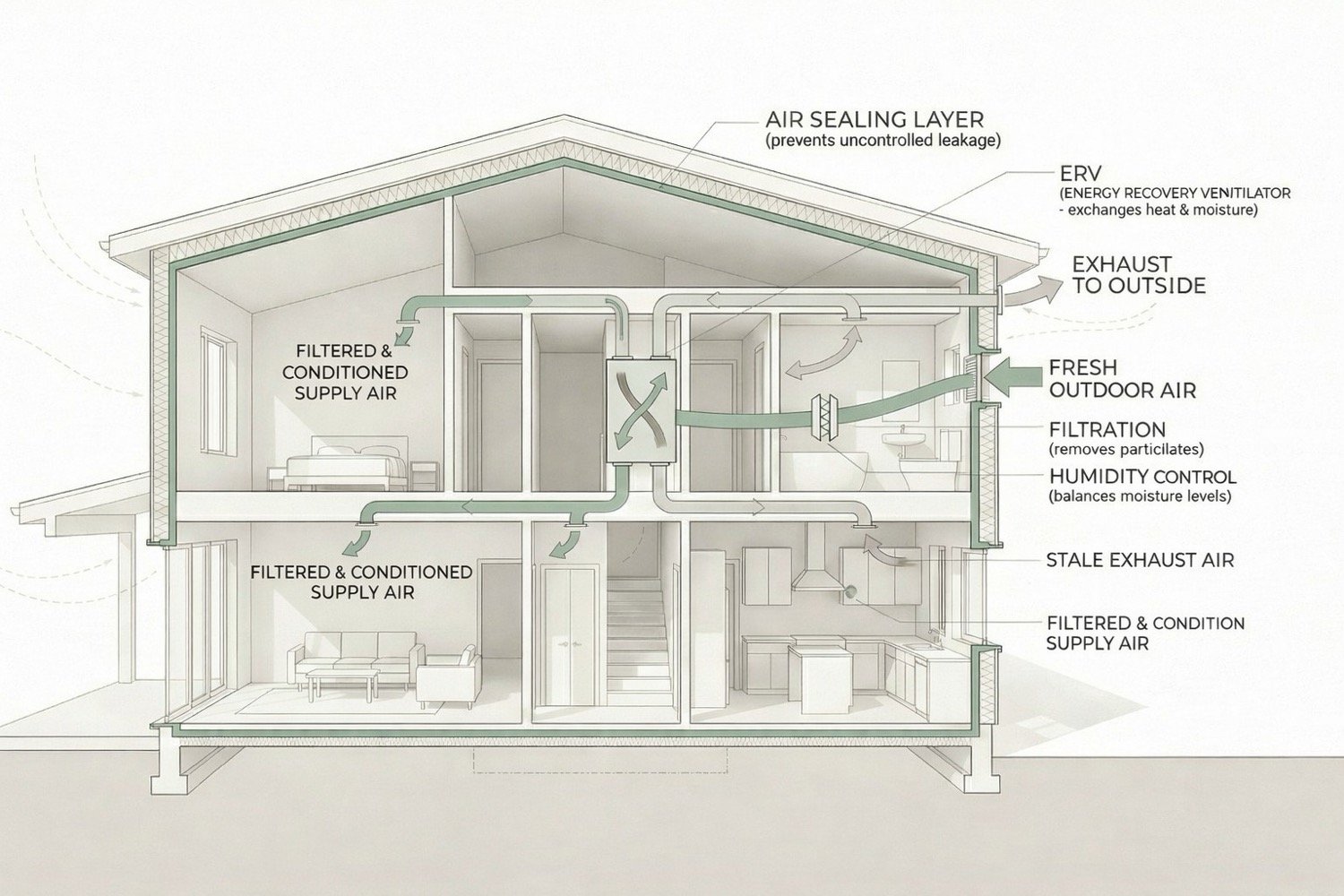
At Fractal, we focus on four interconnected strategies when designing for healthy indoor air:
Air Sealing
A well-sealed building envelope is the foundation of good IAQ. It reduces uncontrolled air leakage, limits the entry of outdoor pollutants, and allows ventilation systems to work as intended.
Ventilation
Fresh air is essential, but it needs to be delivered thoughtfully. We often specify ERV (Energy Recovery Ventilation) systems, which provide continuous fresh air while recovering energy from outgoing air. Improving indoor air quality without sacrificing efficiency.
Filtration
Effective filtration removes allergens, particulates, and outdoor pollutants before they circulate throughout the home, supporting cleaner and healthier indoor air.
Humidity Control
Balanced humidity improves comfort, protects building materials, and helps prevent mold growth. It’s a critical part of both healthy air and long-term building durability.
Healthy indoor air is not a single feature but the result of intentional, integrated design. By prioritizing building science, sustainability, and performance from the earliest stages, Fractal Designs helps create homes that are efficient, durable, and truly future-ready. If you’re planning a new home or renovation and want to design with wellness and long-term performance in mind, contact us to start the conversation about your architectural needs.